
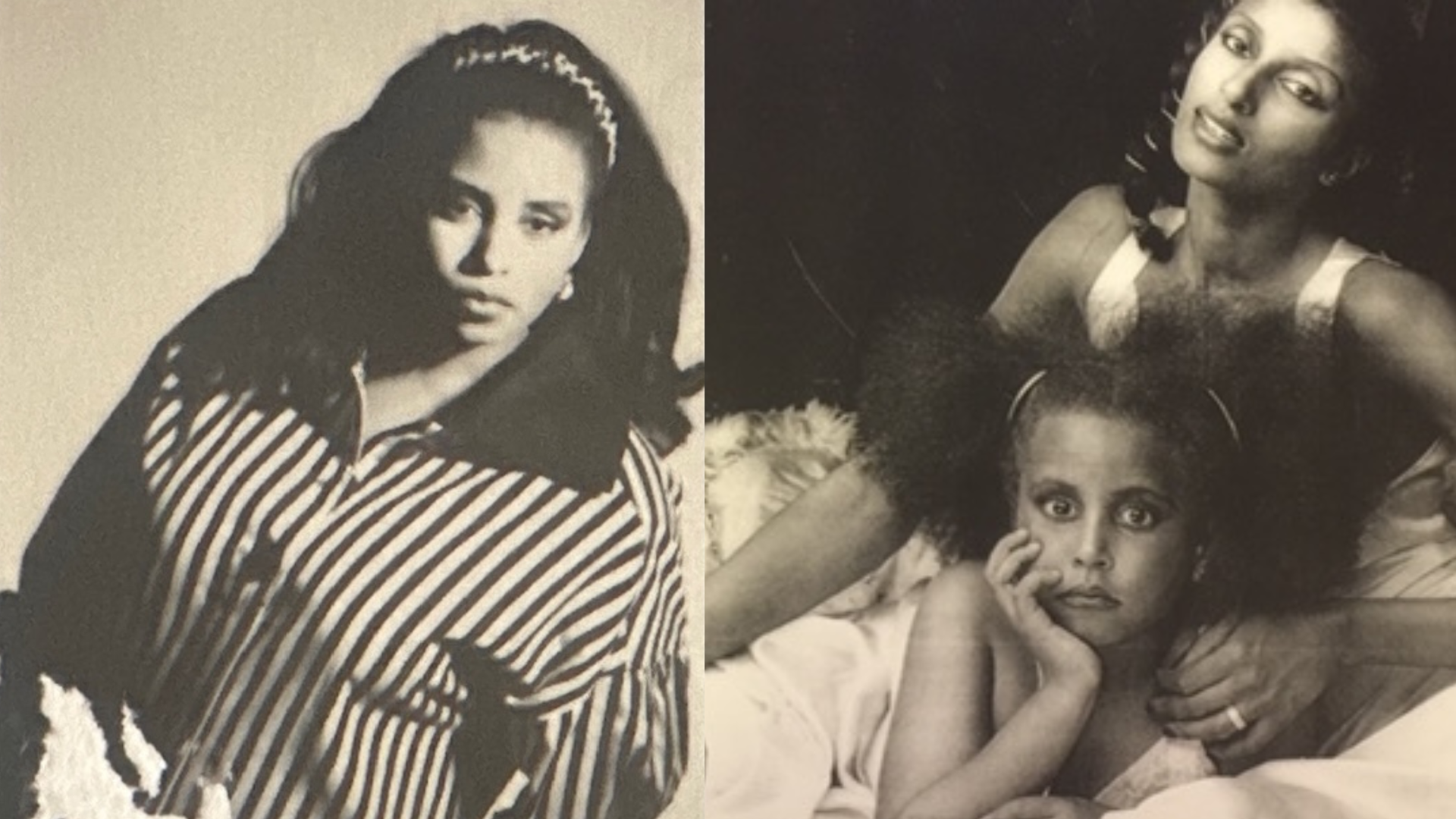
Jessica Carter was born into the world of fashion shows and photoshoots, long before she ever picked up a makeup brush. The daughter of legendary model and actress Linda Carter, she spent her childhood peeking under clothing racks, cheering at runway shows and flipping through modelling portfolios like they were bedtime stories. Supermodels were her aunties, makeup artists her mentors and photoshoots her playground.
That early front-row access gave Carter a vision and the instincts to chart her own course, one brush stroke at a time. Today, she's a former model turned award-winning makeup artist and outspoken advocate for inclusion, using her platform to challenge industry norms and redefine beauty, who it serves, and why it matters.

Early Life and Career
Born in Toronto, Carter was raised in Etobicoke and Oakwood-St. Clair neighbourhoods, attending Rosethorn Junior School, then transferring in grade five to McMurrich Junior Public School.
She grew up learning the inside secrets of the Canadian fashion industry alongside her mother.
"I have vivid memories of going through my mother's portfolio the same way other kids would flip through a picture book; my favourite book was my mom's portfolio! I didn't know that not all kids had this experience until I was about five or six years old." Jessica Carter
When she was 12, her family moved to Jamaica, where she attended Belair High Boarding School and the all-girls Mount Alvernia High School. At 17, Carter returned to Canada, enrolling at Lorne Park Secondary School in Mississauga. There was a brief stint at Humber College to study addictions counselling in 1991, but she quit within her first week.
Instead of college or university, her education came from the fashion world that she grew up in. Carter would frequently accompany her mother, a single parent at the time, to various fashion events. She has vivid memories of seasonal mall fashion shows, roaming the mall until showtime, eagerly waiting and cheering from the end of the runway, clapping wildly for the models, many of whom became close family friends. When backstage, she'd fashion a cozy little bed underneath the clothing racks for herself. "Seeing boobs and briefs were commonplace for me," she laughs.
There were first-class train trips to Montreal, Canada's fashion capital in the 1970s, but it wasn't all glamour; there were tough moments too. One vivid memory involves starting kindergarten while her mother was away working in Paris.
"It wasn't always easy, and I'm grateful for the support of my extended family." Jessica Carter
She quickly realized fashion was a natural progression from her upbringing. "I was with my mother on countless photoshoots, knew most of the photographers by name and was captivated by the transformation process of hair and makeup," explains Carter. So she followed in her mom's footsteps as a model.
Carter launched her modelling career by signing with the Toronto agency Plus-Sized Models, but quickly realized it wasn't a good fit. "There was a lot of favouritism, and we were getting deductions from our pay without explanation." At that time in Toronto, size inclusivity wasn't very popular, and she was openly critical about the lack of inclusivity, even writing published articles on the topic and appearing as a guest on CTV's morning show. But the scene in Canada felt limited, so she looked south.
"That's when I realized the fashion world I loved as a child no longer existed," adds Carter. So she pivoted toward film and TV, where she found more space to thrive.
Looking for a better opportunity, Carter reached out to Elite Model Management in Chicago. At 21, she moved to "Chitown," a city known then for its booming catalogue industry, especially for plus-sized women.
In reality, modelling wasn't lucrative enough, so she started teaching makeup at the Johnny Casablancas Modeling School. "I wasn't even a pro makeup artist yet, but all those years of watching my mom and models apply flawless makeup really paid off," she says. "Teaching was a way to make ends meet while waiting for modelling cheques."
It was also a chance to get to know her father better, who was a Chicago native. During her 18 months in the city, she gained deeper insight into race and identity in America and bonded with her father and grandfather.
Returning to Toronto, she worked at beauty counters for Fashion Fair, Lancôme and even with Iman herself during the brand launch of Iman Cosmetics at Yorkdale Shopping Centre. "Everyone should start at a counter," she insists. "It's the best training ground."
In 1997, Carter approached renowned makeup artist Barbara Alexander to officially learn the ropes. Alexander pointed her to Paul Langill, with whom Carter apprenticed for under a year. "He was brilliant, but the environment was toxic, and I knew I couldn't stay in it," she says.
That decision paid off. In film and television, Carter found not only stability but purpose, carving a path for Black Canadian women in the industry. Her career spans nearly 25 years, including a 14-year run as head of makeup on the culturally iconic show Degrassi, which began airing in October 2002.
Fashion and Diversity

"Racism is taught. We all say it, but we have to actually un-teach it, too." Jessica Carter
In the late 1990s, she volunteered for two years with the Toronto Mayor's Committee on Community and Race Relations, as well as the Common Ground Women's Centre, both of which deeply shaped her lifelong commitment to service.
"What struck me," she recalls, "was being in rooms with people who weren't necessarily Black or people of colour, but who were actively working to dismantle racism. That's when I realized there's a real commitment. And that changes you."
Despite her success, Carter hasn't been immune to racism in the industry. She's faced microaggressions and moments of outright dismissal from people assuming she was underqualified or only present to tick a diversity box.
Racism is unfortunately ever-present in the industry, and there is a fear of speaking out on experiences due to possible backlash. However, Carter is involved in the diversity makeup committee of IATSE 873. They try to ensure that members get opportunities in classes to become proficient in all skin tones. This initiative is committed to diversity, training and elevating the experience for all actors in the makeup trailer.
The first change Carter thinks is necessary is to normalize people of colour working in front of the cameras and behind the scenes. She hopes that her mentorship program on budgeting and negotiating will help BIPOC makeup artists understand the value they bring to the table, fostering a sense of hope for the future of the industry.
Influence and Legacy
In 2013, Carter was invited by the Network of Women in Growth to lead beauty and networking workshops in Ghana, West Africa. Her goal was to introduce women to the creative possibilities within the beauty industry while teaching practical, on-set skills like understanding call sheets, working with directors and covering actors' tattoos.
"I emphasized that success doesn't require a traditional career path; creativity can also lead to financial independence." Jessica Carter
Carter also included entrepreneurship into the training, encouraging the women to sell accessible products like eyeshadows or handmade shea butter items. The impact has been long-lasting, and she still receives updates from participants who have gone on to become photographers and filmmakers. For Carter, these stories are a powerful reminder that beauty is more than skin deep. It can be a gateway to confidence, income and lasting change.
Following her impactful work in Ghana, Carter's career continues to expand with purpose. She's worked as head of makeup on Oprah Winfrey's The Kings of Napa and Barry Jenkins' The Fire Inside about Olympic boxing champion Claressa "T-Rex" Shields.

Carter has helped pave a path for BIPOC artists in the film industry. She earned the Canadian Screen Award for "Best Achievement in Makeup" for her makeup artistry on the CBC show Sort Of, a sitcom built around being a younger millennial and the anxieties that go along with it. She worked alongside and supported show writer Bilal Baig to be their most authentic self as the first Muslim Pakistani transgender person ever to have a show.
Carter is also known for her work as the owner of Oshun Woman, a Canadian registered not-for-profit organization, focusing on her flagship program, emPowered by Beauty, uplifting BIPOC and economically challenged women by teaching beauty industry skills.
Today, nearly 25 years into her career, Carter is as committed as ever. Her vision isn't just to beautify faces; it's to elevate voices. She hopes her mentorship programs help emerging artists navigate the challenges she once faced alone.
"I want to leave behind more than a resume. I want to be remembered for pulling people up when they needed it most." Jessica Carter
Archive of Images at BFC


Linda & Jessica at 5 (Larry Miller)

Jessica Carter's modelling comp card