Fife House: Four Decades of Housing Toronto's HIV Community
The DispatchToronto's Fife House emerged as a remnant of the 1980s AIDS crisis: a global epidemic that has now killed more than 40 million people worldwide. In its wake, the crisis left Torontonians riddled with decades of housing insecurity and a generational uphill battle against the stigma attached to identifying as someone with HIV.
Nearly four decades after the AIDS crisis first exposed the city's systemic failures in providing adequate care and housing for people living with HIV, failures recorded through a series of unlawful evictions, job losses and doctors who refused to treat patients once their status became known, Fife House opened its first residence doors on July 1, 1990. The organization has since grown into the largest HIV housing provider in Ontario, with six residential programs serving roughly 200 people a year.
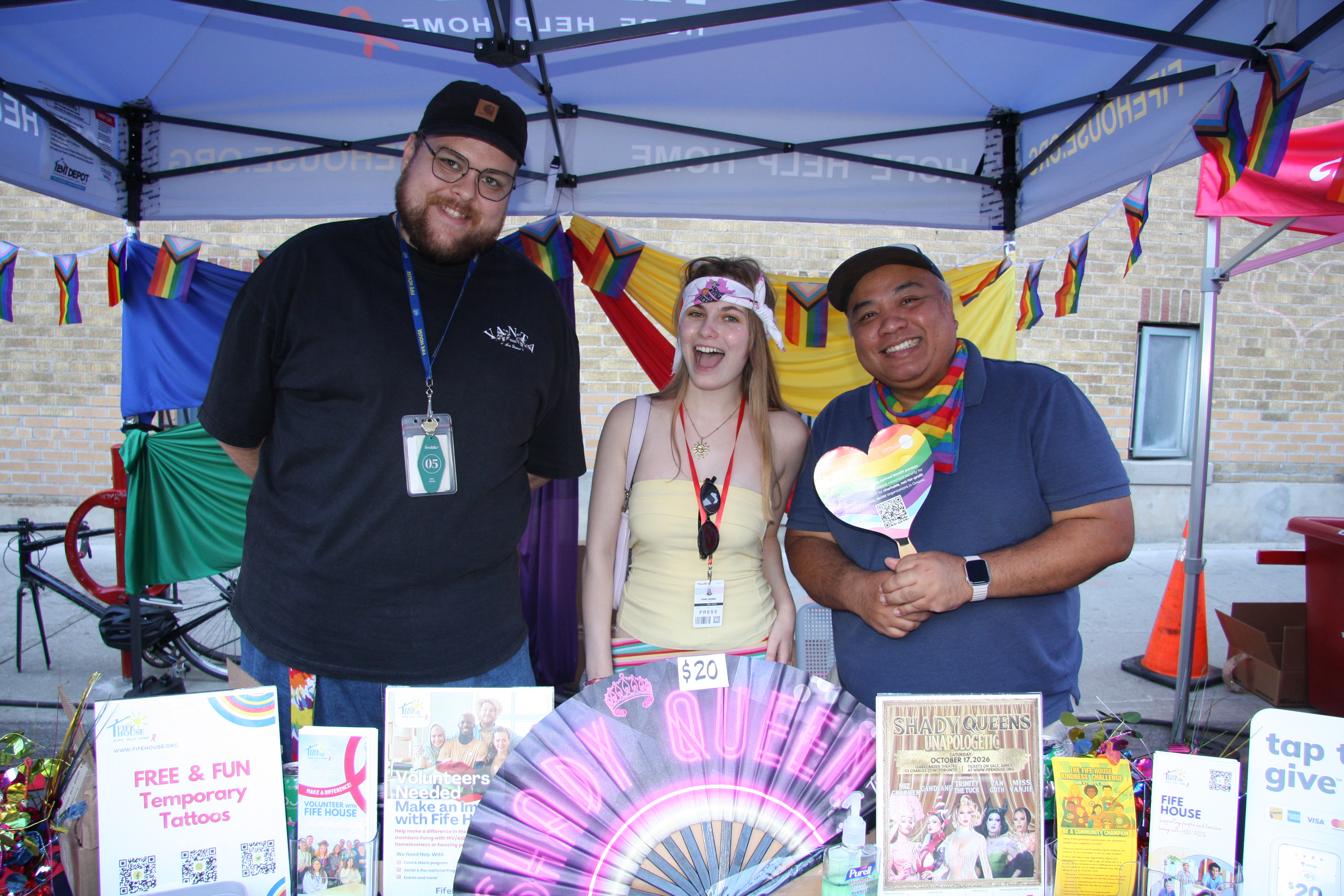
Casey Sabawi, the director of development and communications for the last three years, emphasized the evergreen importance of visibility in sharing resources to Toronto's diverse community. With Pride bringing attention to the community, Sabawi believes it's an opportunity to reach and connect with future residents, volunteers and to share their cause with the community through their booth.
"We can be with the community, share information with the community, and be accessible to the community," Sabawi said. "It's really wonderful because Pride is open to everybody, and I know Pride Toronto tries really hard to make sure it's accessible to everybody's needs."
Through Sabawi's role of spreading awareness and getting people involved in the cause, that visibility is critical in spreading Fife House's message:
"At Fife House, we believe in being who you are and coming as your authentic self. So it's really wonderful to see people celebrating themselves, celebrating each other."
At the core of Fife House's operations is the recognition of how critical it is to approach systemic issues through a lens of intersectionality when working with diverse community members of different races, genders and ages, Sabawi said. Beyond providing individuals with housing, the charity desires to go beyond to ensure their basic needs are not only being met but exceeded.
"We offer supportive and affordable housing and wraparound services: meals, social programs and mental health services - so that they can actually live with dignity and thrive," Sabawi said.
Beyond its six residential programs, the organization has served more than 1200 residents annually according to its site, through its housing and outreach programs.
Among its stream of outreach services is the Linkage to Care program that offers unique care to members who identify as Indigenous, Black or people of colour to provide care that recognizes the complexities of varying lived experiences.
Fife House focuses on addressing the systemic harms that bleed into the lives of individuals facing stigma due to their HIV status. According to their website, a big piece of that work is addressing social exclusion, mental health struggles and unemployment for individuals with HIV through connecting their clients with case workers. Research first published in 2008 in the journal Occupational and Environmental Medicine found that 45 to 65 per cent of individuals with HIV are unemployed.
The organization relies on core government funding alongside public donations and special events like Pride to maintain its supportive housing and client services to uplift community members.
"Pride is always amazing, it's always fun to be with the community, and at Pride, we reach people from all walks of life," Sabawi said. "If there's anybody who hasn't been to Pride before, they really should come out and experience it."
Fife House is currently running its annual Kindness Challenge, a fundraiser inviting community members to complete 100 acts of kindness between June 4 and Sept. 4, 2026, in support of people experiencing HIV-related homelessness.
Read more from The Dispatch at tnaado.ca/dispatch