Technology

Client & Vendor Profile Hub – Centralize Every Relationship in One Place

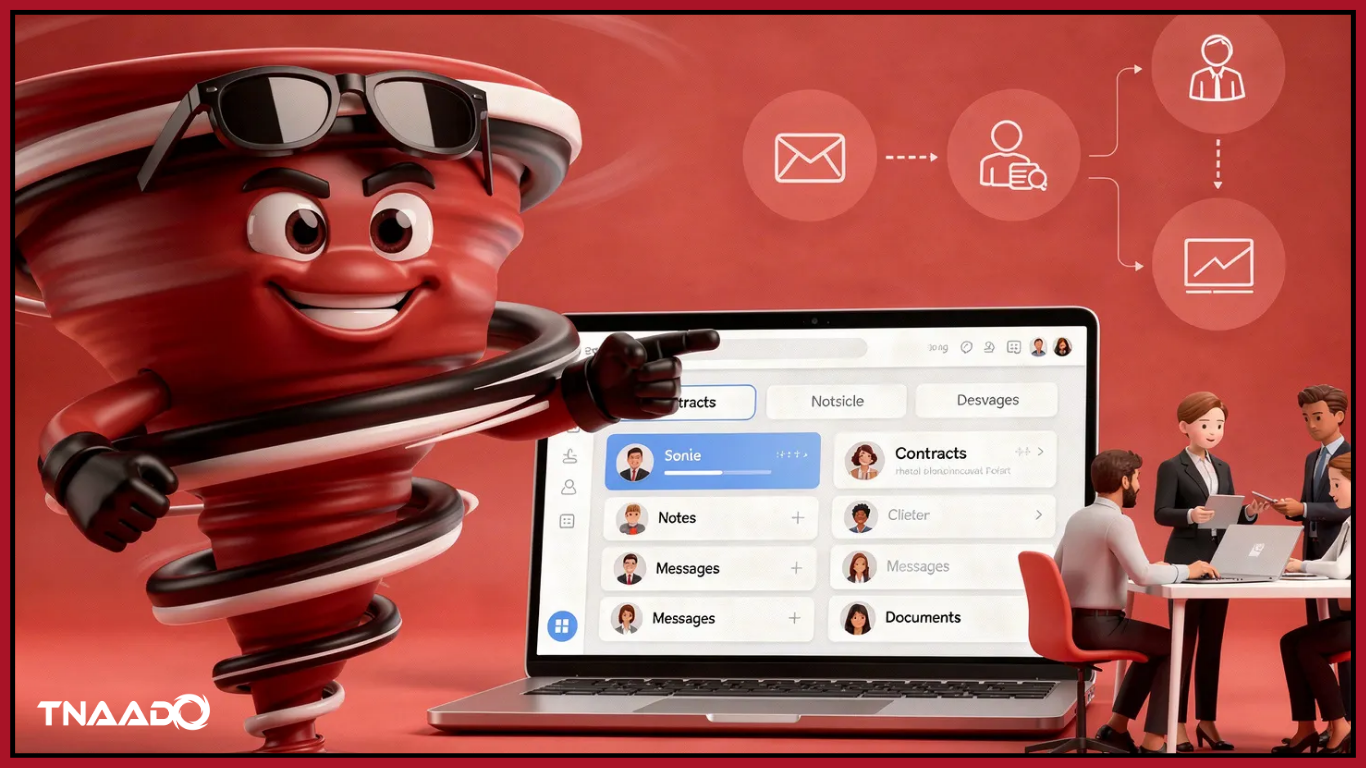
Centralize client and vendor relationships. Store contracts, notes and details in one profile. Protect business continuity.

March 26, 2026 By Tnaado Team Technology 17 min read

Client & Vendor Profile Hub – Centralize Every Relationship in One Place

Your best salesperson just quit. Do you know everything they knew about your top 10 clients?

For most businesses, the honest answer is: no. Contracts are buried in inboxes. Negotiation details live in someone's head. Vendor pricing agreements are stored in scattered PDFs. Important promises were made on phone calls no one documented.

And when a key employee leaves? Context disappears.

This is not a CRM problem. This is a knowledge continuity problem. If your business manages ongoing client or vendor relationships, you need structured institutional memory — and you need it before someone walks out the door.

Where Relationship Knowledge Hides Today

Every business depends on relationships — clients, suppliers, manufacturers, distributors, strategic partners, and contractors. But most companies store relationship knowledge the same fragmented way:

Where Critical Relationship Knowledge Lives in Most Businesses
Contracts in Email Threads
Buried across inboxes, invisible to the team
Negotiation Details in Someone's Head
Leaves when they leave — no recovery
Pricing in Random Folders
No unified view, no version control
Meeting Notes in Notebooks
Personal, inaccessible, unsearchable
Verbal Agreements Undocumented
No paper trail — disputes happen here
Renewal Dates in Memory
Auto-renewals catch businesses off guard

When a team member leaves, you don't just lose labour. You lose context. Context that took months to build, can never be fully reconstructed, and directly impacts your client relationships and vendor operations.

"This is not a CRM problem. This is a knowledge continuity problem. Email is not a system. Shared drives are not structure. What businesses need is not more storage — they need institutional memory built into operations."

Real-World Scenario: When a Sales Rep Leaves

Real Scenario Sales Rep Resignation — 15 Active Accounts

Your top salesperson manages 15 accounts. They resign with two weeks' notice. You suddenly realise the knowledge gap is far larger than expected:

No one knows which contracts auto-renew this quarter
No one remembers the negotiated pricing tiers per account
No one knows which client asked for custom terms
No one knows what was promised in last quarter's call
No record of which accounts had escalations or friction points
No documentation of which clients are high-risk for churn
What happens next
Searching inboxes for hours Calling former employees Risking contract breaches Damaging client relationships Weeks of slow onboarding

All of this because information wasn't centralized. The knowledge existed — it just didn't belong to the company.

Email Is Not a System. Shared Drives Are Not Structure.

Two common beliefs that create false confidence in business continuity:

What Businesses Rely On
  • Email — fragmented, individual, non-searchable by team
  • Shared drives — storage without context or structure
  • Personal spreadsheets — not team-accessible
  • Chat threads — ephemeral, undocumented
  • Memory — leaves when the person leaves
✓ What Businesses Actually Need
  • One structured profile per client or vendor
  • All contracts attached directly to that profile
  • Conversation history and notes documented
  • Financial terms and custom agreements stored
  • Team-wide, role-controlled access

The Cost of Starting From Zero

When new hires inherit accounts without documentation, the impact goes beyond slow onboarding:

New Hire Inheriting 15 Accounts

✗ Without Profile Hub

  • Inherits a list of names — no history
  • No knowledge of negotiation background
  • No context on friction points or promises
  • No payment pattern documentation
  • Weeks spent reconstructing basic context
  • Misses upsell opportunities early on
  • Clients frustrated by repetitive questions

✓ With Profile Hub

  • Full profile per client from day one
  • Contract terms and history instantly visible
  • All meeting notes and commitments documented
  • Payment patterns and risk flags accessible
  • Productive within days — not weeks
  • Upsell opportunities are already identified
  • Clients experience seamless continuity

What a Client/Vendor Profile Hub Should Actually Do

A proper relationship management system isn't just storage — it's structured institutional memory with five non-negotiable capabilities.

1
One Profile Per Relationship
No duplication. No scattered documents.
Every client and every vendor gets a single, centralized hub. One place to look — no matter who's asking, no matter when.
  • Structured contact information
  • Company and relationship overview
  • Status and risk classification
  • Cross-department visibility
2
Contract Repository
Every signed document in one place — no inbox diving.
Every contract tied to its relationship. Renewal dates surfaced automatically. No surprises, no missed obligations, no last-minute scrambles.
  • Signed contracts and amendments
  • NDAs and pricing agreements
  • Renewal dates and termination clauses
  • Version history and attachments
3
Conversation History
So knowledge doesn't die with employees.
Structured logs of every meaningful interaction — meeting notes, commitments, escalations, concessions. The institutional memory that protects relationships when people move on.
  • Meeting notes and call summaries
  • Agreed concessions documented
  • Escalation history logged
  • Verbal commitments recorded
4
Financial Context
Terms, tiers, and flags — visible to every relevant team member.
Relationship intelligence that bridges sales, finance, and operations — so no department is operating blind on a relationship another team already knows well.
  • Custom pricing and discount tiers
  • Payment terms and credit limits
  • Outstanding balances and invoicing structure
  • Risk flags and lifetime value
5
Team-Wide Access
No more "ask John — he handled that account."
Controlled role-based access ensures the right people see the right information — while preventing sensitive details from being broadly exposed across the organization.
  • Role-controlled access by department
  • Cross-team visibility where needed
  • Real-time updates as context evolves
  • Version tracking and audit trail

What You See When You Open a Profile in TNAADO Portal

When you open any client or vendor profile inside TNAADO Portal, everything is already there — no digging, no guessing, no assembling from disparate sources.

Client Profile View — TNAADO Portal
Contact information
Active contracts
Signed documents
Renewal reminders
Financial agreements
Historical notes
Internal comments
Attached files
Risk flags

Why This Is Strategic Infrastructure, Not Just Operational Tool

Client and vendor relationships are business assets. How you store the knowledge around them directly affects company resilience, valuation, and growth capacity.

✗ Knowledge Scattered
Business value decreases
Knowledge that lives in people creates key-person dependency. Investors, acquirers, and partners see fragmented operations as a risk factor — because they are.
✓ Knowledge Centralized
Business becomes resilient
Centralized institutional memory increases company stability, supports scalable growth, and signals operational maturity. Relationships become assets of the business — not of individuals.

Common Relationship Management Mistakes

Mistake 01
Storing Contracts in Personal Inboxes
Creates a single-point-of-failure for every relationship. When that person leaves, you lose both the document and the context around how it was negotiated.
Mistake 02
No Central Notes System
Verbal agreements and strategic conversations go undocumented. These are often the details that create disputes — or the opportunities that create upsells.
Mistake 03
No Renewal Tracking
Auto-renew clauses catch businesses off guard at the worst moments. A missed opt-out window can lock you into unfavourable terms for another year.
Mistake 04
No Shared Context Between Finance and Sales
When sales and finance operate in silos, custom discounts get forgotten, invoicing errors multiply, and relationship context never reaches the people who need it most.
Mistake 05
Onboarding New Hires Without Documentation
Without structured profiles, new team members waste weeks reconstructing relationship history — often damaging client trust in the process by asking questions that should already be answered.

Pro Tips for Relationship Continuity

Pro Tip 01
Document Every Strategic Call
Even brief summaries create institutional memory. Five minutes of notes after a call can save hours of reconstruction later — and protect you in any future dispute.
Pro Tip 02
Store Signed Documents Immediately
Never rely on "I'll upload it later." The contract lands in an inbox and stays there. Build the habit of uploading to the profile the moment a document is signed.
Pro Tip 03
Tag Profiles by Risk Level
Not all relationships are equal. Flagging high-risk clients and vendors ensures the right level of attention without requiring team members to manually assess status each time.
Pro Tip 04
Review Profiles Quarterly
Keep information current. Outdated profiles create the same problem as no profiles — someone makes a decision based on information that no longer reflects reality.
Pro Tip 05
Build Knowledge Before You Need It
Don't wait until someone resigns to realize the context gap. Institutional memory is built over time — and the best time to start building it is before the first departure forces you to.

FAQ — Client/Vendor Profile Hub

It goes beyond a typical CRM by centralizing contracts, signed documents, conversation history, and structured relationship context — not just contact information. The focus is institutional memory and business continuity, not just pipeline management.
Yes. Role-controlled team-wide access ensures continuity across departments. The right people see the right information — with version tracking and real-time updates when any team member adds context.
Yes. Contracts, amendments, NDAs, and pricing agreements are attached directly to each profile — with renewal date visibility to prevent missed opt-outs or auto-renewals catching you off guard.
Nothing disappears. All information remains centralized in TNAADO Portal — accessible to remaining and incoming team members. That is the entire point: knowledge belongs to the company, not the employee.
No. Growing businesses benefit the most from early structure. The smaller the team, the more fragile the knowledge base — and the more damaging a single departure can be if context hasn't been systematically captured.

Relationships Should Belong to the Company — Not the Employee.

When your best salesperson quits, your business should not lose intelligence. When a vendor manager resigns, your supply chain should not stall. When a new team member joins, they should be productive within days — not weeks.

If your relationship knowledge lives in people instead of systems, you are one resignation away from a continuity crisis. Institutional memory is not an optional upgrade for growing businesses — it is infrastructure.

TNAADO Portal's Client/Vendor Profile Hub gives every relationship its own structured home — one profile, every contract, every conversation, every detail, accessible to your entire team.

  • One centralized profile per client and vendor
  • All contracts, amendments, and NDAs attached directly
  • Renewal date visibility — no more auto-renew surprises
  • Conversation history, notes, and verbal commitments documented
  • Financial context accessible across teams
  • Nothing disappears when someone leaves
TNAADO Portal — Client/Vendor Profile Hub

Build Institutional Memory. Protect Every Relationship.

Built for businesses that cannot afford to lose context when people move on. Get in touch to learn how TNAADO Portal's Profile Hub can protect your client and vendor relationships.

✓ One Profile Per Relationship ✓ Contract Repository ✓ Team-Wide Access ✓ Continuity Built In

Reach out directly to discuss your team structure and how TNAADO Portal can protect your relationship knowledge:

contact@tnaado.ca